
The first camera was borrowed.
July 18, 2026
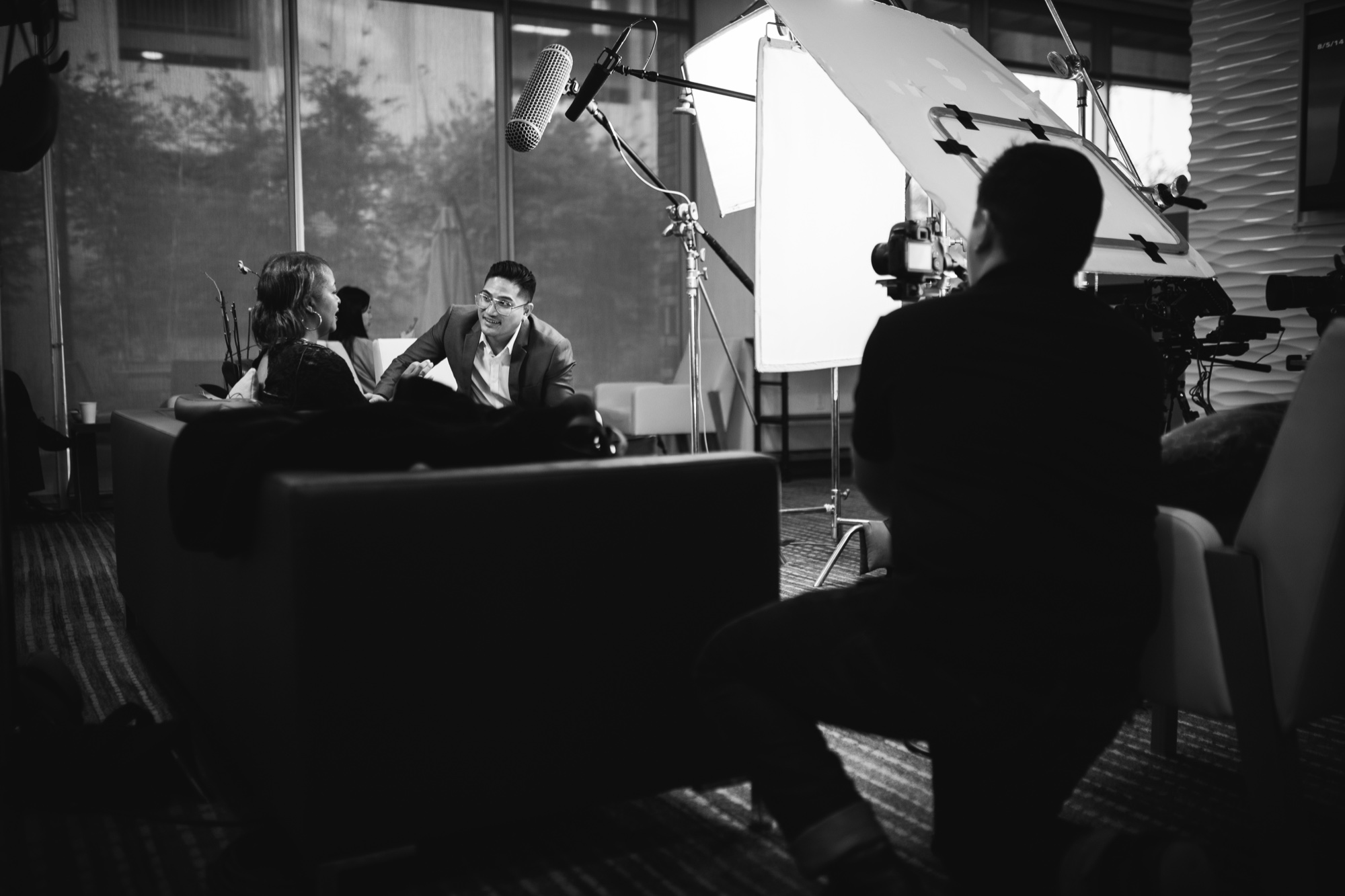
Before NEEBA, before the Nobel laureates and the $30-million campaigns, there was a sign-out sheet at a community center in San José and a camera that wasn't mine.
To explain the sign-out sheet I have to start with my family. We know injustice from the inside. Not as a headline, as a campaign with our name on it: Justice for the Custodio Family. I learned young what it feels like when a system describes someone you love as a case number. That fight pulled my mother and me into community work, and at sixteen it pulled me through the doors of Silicon Valley De-Bug, where we helped build the Albert Cobarrubias Justice Project. Families organizing to defend their own.
De-Bug had cameras. I borrowed them. (Shout out to Raj Jayadev and Charisse Domingo.)
I pointed them at families the system had wrongfully convicted or targeted. Court files describe defendants: case numbers, charges, priors. I filmed sons. Mothers at kitchen tables. The block someone grew up on. At some point I made what I believe was the first video mitigation packet. Instead of handing a judge a folder of documents, we handed them a film. A person, before the sentence.
That's still the only job I've ever had. Everything since has been a change of audience.
Asking strangers to care
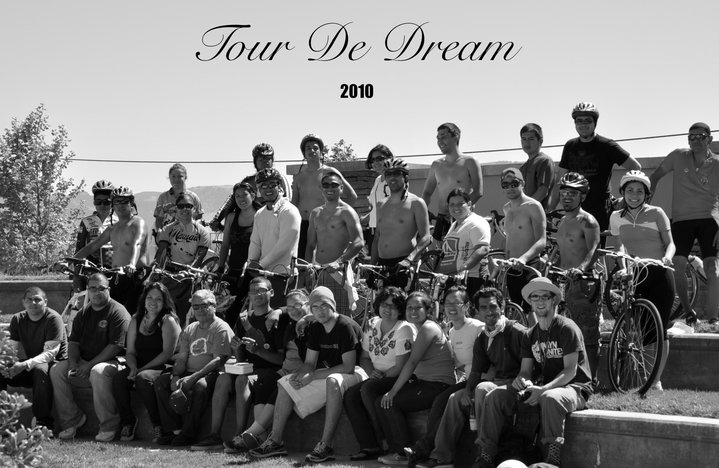
School was where I learned to scale it. At De Anza College the students elected me student body president, and I spent the seat moving real institutional support and funding toward underserved students and students of color. When the fight moved to the state level, I got on a bike. Five hundred miles from Berkeley to Los Angeles with the Dream Riders, raising awareness for AB 540, asking strangers to care one town at a time. My legs have never forgiven me and I'd do it again tomorrow.

The ride ended. The asking didn't. I transferred to UC Santa Cruz, studied politics alongside film and digital media, and graduated magna cum laude. That campus is where the justice work and the filmmaking finally stopped being two different things. Somewhere in there I also coached and led the UCSC Muay Thai program, which taught me more about running a set than any film class did. Composure. Repetition. Respect for the person across from you.
Back to the block
After college I took all of it home. I launched community centers across San José for the city's Parks, Recreation and Neighborhood Services, in the neighborhoods the city called “hot spots.” That's where they were needed. And I kept teaching: film, photography, and poetry for incarcerated youth in juvenile hall, through the county's community schools. Over the years those storytelling programs raised more than a million dollars for kids the system had already made its mind up about. In 2014 the City of San José put it on paper, a commendation from Mayor Chuck Reed in partnership with the Silicon Valley Talent Partnership.
Through all of it, my mother and I were fighting her cancer together, and fighting to make it happen for us in East San José. She had carried four sons through homelessness on her own. Now we carried each other. I don't say it for sympathy. I say it because it explains the work: you film other people's hardest chapters differently when you're living your own.
The ripple
The turn came from the hardest film I had made yet: a music video for a family who lost their child to a drive-by. It took first place at Adobe Youth Voices, and the award turned into my first full-time video job, then “This is San Jose” with the city's economic development office. The industry playbook said move to Los Angeles. I stayed. I built a studio and a record label in San José instead, and found myself directing music videos for the artists I grew up listening to: Too Short, Andre Nickatina, Traxamillion.
Then the work started traveling further than I did. Vernon Davis, Super Bowl champion, the tight end everybody knew from the 49ers, sought it out. He became a client, and through him came the Vernon Davis Foundation for the Arts. Here was a guy at the very top of his game putting money into young artists. I knew what that felt like from the receiving end.
Then came Jamba Juice, and Jamba was the ripple. ASUS. Intel. Google. Verizon. Brands I'd only known as logos started asking for the same thing the families at De-Bug had needed: make us real to the people making decisions about us.
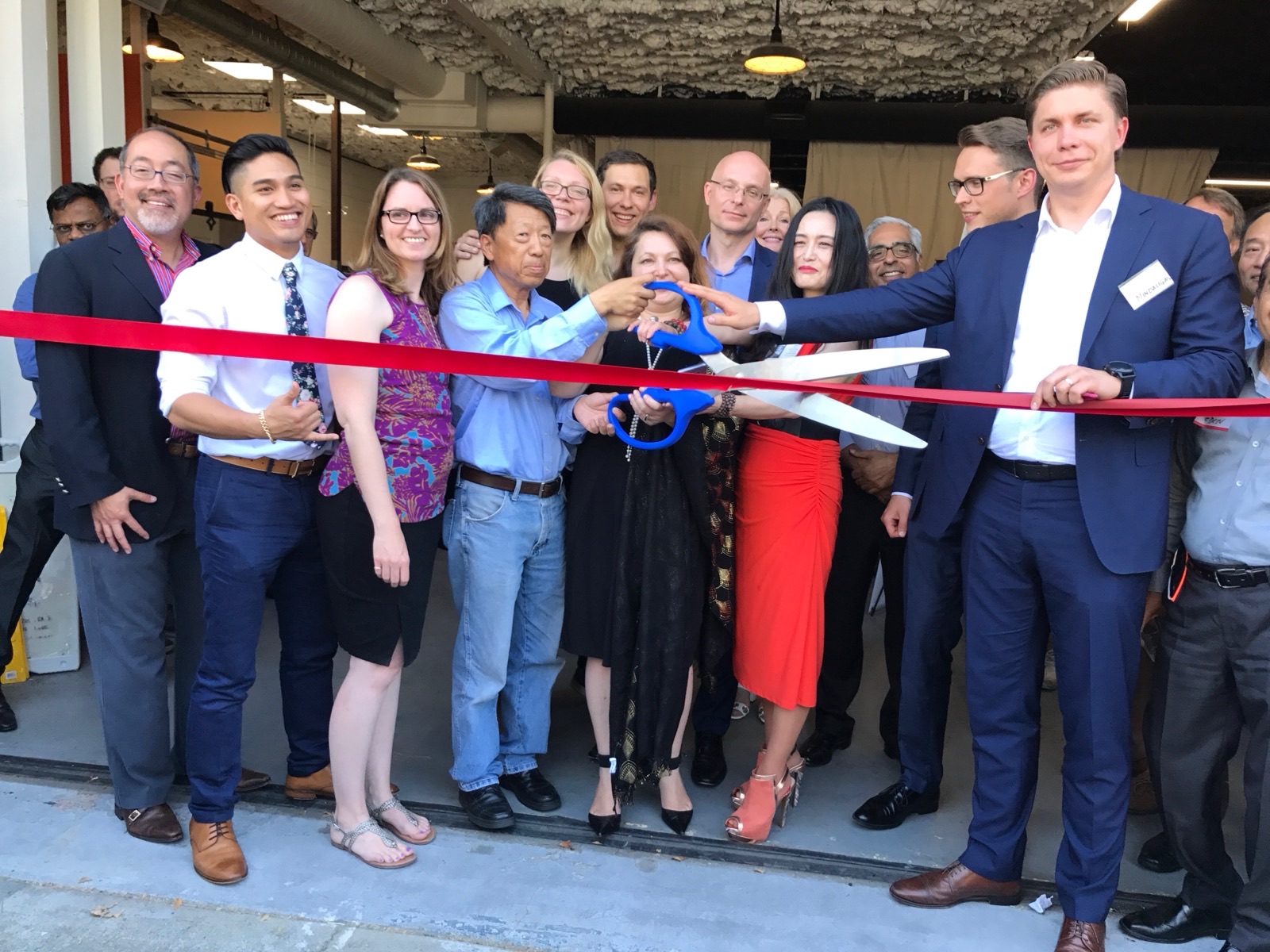
The city noticed before the industry did. In 2017 the State of California brought us to Sacramento and named NEEBA Silicon Valley Small Business of the Year. Metro put us in its Best of Silicon Valley issue. Content Magazine put our crew, BAMN, By Any Media Necessary, on the cover of its Sight & Sound issue. Marketing Dive and Mobile Marketer came asking how a San José shop was doing what agencies twice our size couldn't.


People kept asking the practical question: wasn't I worried about the career? The ceiling on staying? My answer never changed.
I'm always going to be a devoted son first. My name is Marlo because her name was Marilou. I am her junior.
The rigs got bigger
De Anza brought me back too, this time as its multimedia producer. The same campus where my education began, where I'd fought for students who looked like me, was now handing me the keys to tell its stories. Full circle isn't a metaphor when you park in the same lot you used to. And the teaching never really stopped: three years as a guest lecturer at UC Santa Cruz, then a year at Emerson College, talking to film students who reminded me of a kid with a borrowed camera.
Eventually the craft carried me to Bosley, the world's leading hair restoration company. First behind the camera, then leading it all as Head of Content & Creative: the brand's content engine, $500K a month in digital, a million a month in TV. That's also where I pioneered AI visibility for the brand, making sure that when machines started answering people's questions, Bosley was part of the answer. What I confirmed there is something the kitchen tables taught me first. The craft doesn't change with the budget. The stakes were always highest at that first table.

Two studios, one job
Today I consult for cybersecurity companies and high-growth tech businesses. Same job, newer machines. But the corporate work has never crowded out the projects I care about most. Right now that's The Heartwood, a feature documentary for the City of Mountain View about an old hotel that became homes, and the residents whose lives changed inside it. Somehow I keep coming back to affordable housing and communities in need. Maybe not “somehow.” A kid who slept wherever his mother could find shelter grows up and keeps making films about home. It's not a coincidence. It never was.
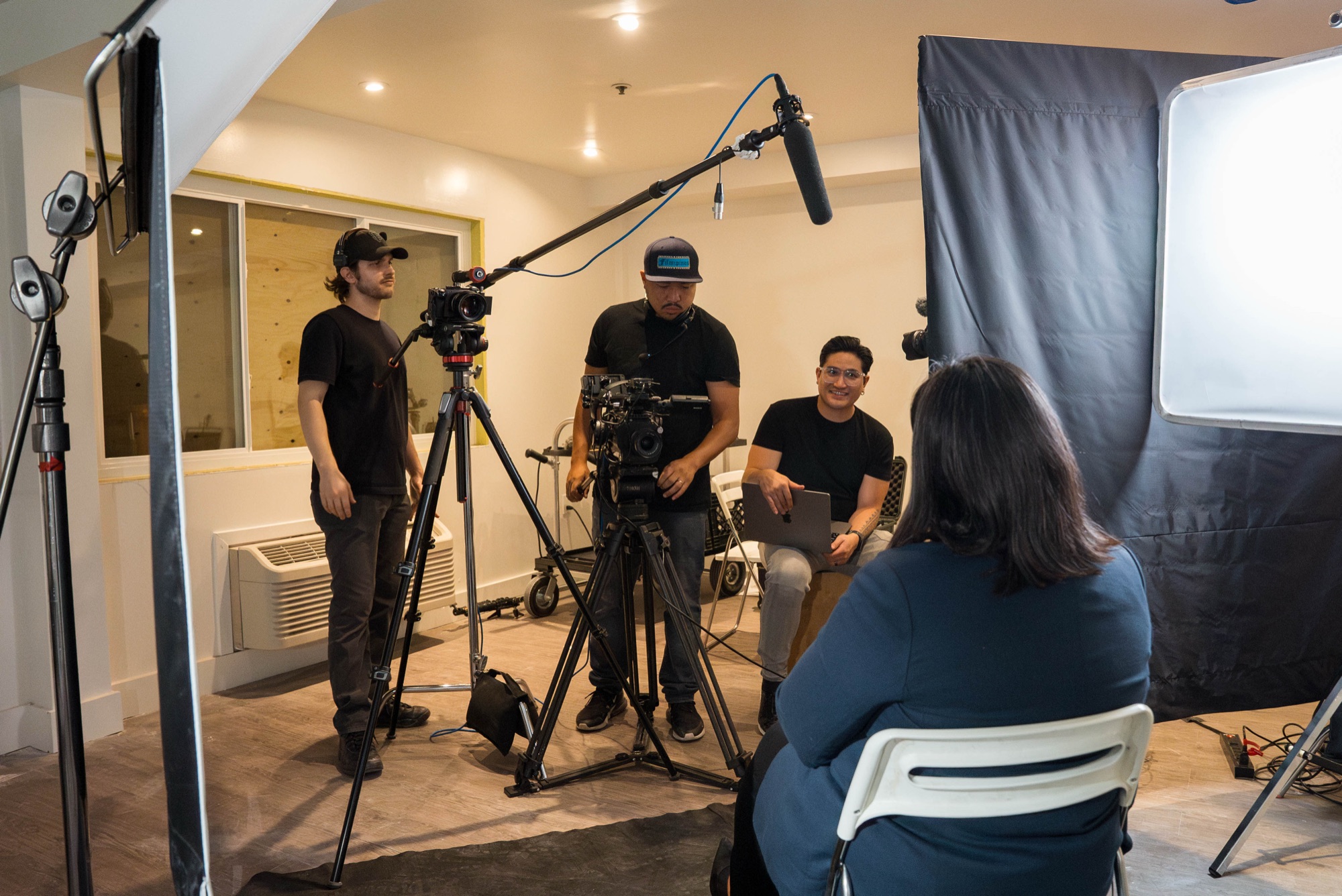
That's why NEEBA is two studios. NEEBA Impact exists for the organizations doing the hardest work, because I know exactly what it means when someone finally sees your family as people. The discipline that started with a borrowed camera runs every set we build.
These days I live in Las Vegas with my beautiful wife and our two sons. I dream of a baby girl.
My mother didn't get to see this part. But I've always said it plainly: for me to make it down here, she had to go up to heaven and pull some strings.
The first camera was borrowed. Everything it taught me, I kept. And every day, I live the life she always wanted for me.